

College basketball is full of teams flying under the radar—programs that rarely make headlines but quietly put together elite-level stats, efficient lineups, and underrated talent. While most rankings focus on the usual suspects, there’s a deep tier of teams currently pegged in the 200–300+ range by major outlets that could easily outperform expectations. Some of these programs are poised to climb 100 spots in the national pecking order, and a few even have the pieces to contend for conference crowns in leagues where they’re pegged as 20th or 25th. This article highlights the deepest sleepers in college basketball—teams that could shock the world if given the chance.
IU Indy
IU Indy might be the deepest true sleeper in the country — a team buried in the 350s by most outlets but quietly retooling around a proven winner. New head coach Ben Howlett, hired late in May, arrives from Division II powerhouse West Liberty, where he went 217–37 (.854) — one of the best winning percentages in NCAA history. He brings with him a chunk of that program’s core and a style that has ranked among the nation’s fastest and most efficient offenses for years.
Howlett’s challenge will be deciding whether to unleash the same high-octane attack that regularly chased 100 points a night at West Liberty or slow things down in the Horizon League. Either way, the foundation is in place: several of his trusted players followed him to IU Indy, giving the Jaguars instant chemistry and familiarity with his system.
It’s an experienced, versatile rotation loaded with shooting and playmaking size. Woodward, in particular, stands out as a 6-7 forward who can facilitate offense and stretch the floor — a rare skillset at this level.
With Howlett’s track record and a system built around spacing and pace, IU Indy looks far more like a mid-200s roster than one sitting in the 360 range. If the offense translates to Division I, this team could shock the Horizon League and make an early push toward the middle of the pack — or even flirt with contention in year one.
Central Michigan
Another Division II powerhouse coach makes the jump to Division I — and this one could make an immediate impact. Andy Bronkema, who went 278–105 (.726) and won the 2018 Division II national title at Ferris State, takes over at Central Michigan. His Ferris teams have been consistently strong — No. 24 nationally last year and in the Elite Eight just two seasons ago — and he brings both his winning pedigree and several of his former players to Mount Pleasant.
This roster is built in his image: physical, experienced, and filled with length and shooters. Bronkema’s first Central Michigan team looks unusually well-balanced for one projected in the 320s — with legitimate size across the frontcourt and multiple players who can stretch the floor.
Bronkema’s track record and the roster’s mix of high-efficiency shooting and size (Claerbaut at 7-0, Mullen at 6-10, Aburashed at 6-10, Nation at 6-7) make Central Michigan one of the more intriguing rebuilds in the MAC. With returning shooters like Whitaker and Johnson flanking that front line, the Chippewas could be far more competitive than their current projections suggest.
This looks less like a bottom-50 roster and more like a mid-table MAC team capable of pushing the top half by February. Don’t be shocked if Central Michigan ends up more than 100 spots higher than most preseason models.
Denver becomes the third sleeper on this list led by a Division II coach making the jump to Division I, and the formula looks strikingly similar: proven success, immediate buy-in, and top-end D2 transfers who can play right away. Tim Bergstraser, fresh off a 75–22 (.773) record and a Sweet 16 run at Minnesota State–Moorhead, now takes over a Pioneers program with real upward potential. His teams ranked fifth nationally in Division II last season, and he brings with him several of his best players — including one of the highest-rated D2 transfers in the country.
With a backcourt headlined by Carson Johnson and Zane Nelson, plus shooters like Motta and Kinsey on the wings, Denver suddenly has one of the more skilled lineups in the Summit League. Add in Bergstraser’s winning pedigree and familiarity with several of his core players, and this is a team that could rise 100+ spots in national rankings if the offense translates quickly.
Denver finished 13–18 last year, but the new personnel and coaching direction give them a ceiling that looks far closer to a top-half Summit team than a bottom-tier rebuild. If Johnson adapts smoothly, the Pioneers could be a genuine dark-horse contender in a league that rewards offensive firepower.
Southern Miss isn’t a rebuild story — it’s a redemption one. Head coach Jay Ladner has already shown he can put together a top-100 team, reaching No. 99 nationally in 2023, but after slipping to 293 last year (and as low as the 340s earlier in his tenure), he badly needs a turnaround season. This year’s roster gives him that chance, built almost entirely on a wave of JUCO talent — with several nationally ranked transfers, including the No. 2 and No. 13 JUCO players in our database.
This is a classic “bites at the apple” roster — enough athletic, productive newcomers that a few are bound to pop. If even two or three of these high-upside players translate at the Division I level, Southern Miss could look completely different by midseason.
There’s no shortage of talent — just uncertainty about who will emerge as the go-to option. Tavares and Ezuma headline the newcomers, but Curt Lewis could quietly be the key swing piece if he regains his form from Eastern Kentucky.
If even a few of these JUCO standouts hit, Ladner could again have a top-three team in the Sun Belt. Given the volume of incoming production and athletic upside, Southern Miss looks like a clear buy-low candidate capable of leaping 100+ spots nationally and getting back into the conference mix.
Pacific
Dave Smart’s debut season at Pacific didn’t quite live up to the hype many (including me) expected, but year two feels like a reset button. I’ve written plenty about Smart’s Carleton dynasty — how he turned rosters of unheralded players into teams capable of beating NCAA and even Final Four-caliber programs in exhibitions. That same formula is still in play here, and this roster gives him more pieces that fit his system.
Elias Ralph returns as one of the better mid-major forwards in the country and should take another step if his outside shot (27.3% last year) climbs closer to the percentages he’s shown in Canada. Pacific also adds proven scoring and experience across multiple positions, plus real size and efficiency inside with the addition of Isaac Jack and K.C. Ibekwe. This team looks deeper, more balanced, and better built for Smart’s defensive structure.
If the chemistry clicks, Pacific could jump 100+ spots from most preseason projections and emerge as a legitimate dark horse in the middle of the WCC.
This roster finally gives Smart the blend of shooters, size, and toughness he thrives with. If the ball movement and defense return to his Carleton-level standards, Pacific could be one of the biggest surprise risers in the country.
Sacramento State
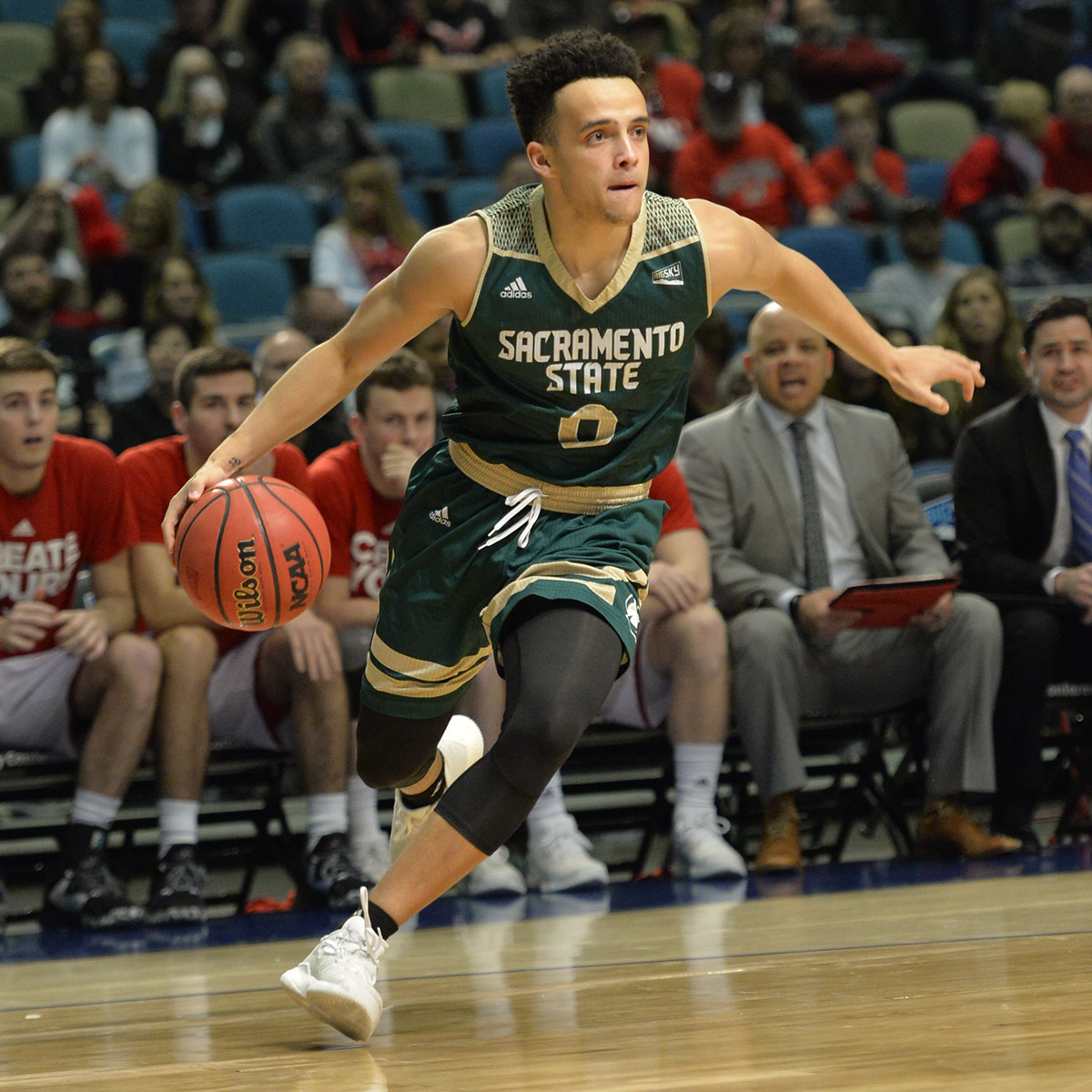
Sacramento State enters the season with a lot of intrigue. Mike Bibby’s hire raised eyebrows, but the roster he and staff have assembled — particularly the acquisition of Bear Cherry — gives this team legitimate talent in a conference that rewards impact players. There’s still some uncertainty around Bibby’s in-game coaching ability, but the combination of proven scoring, size, and athleticism could allow this squad to outperform expectations if he at least manages the basics effectively.
Analysis:
Sac State is top-heavy with talent, particularly at center and wing. Cherry is a high-level mid-major addition who can anchor the team in the paint, while Jones, Gardner, and Johnson bring scoring and versatility. Bibby’s coaching ability is the main question mark, but if he can manage rotations and offensive flow like he did in high school and leverage his NBA experience, this roster could easily exceed expectations in the Big Sky. Depth is a concern, but the top-end talent gives the Hornets a chance to compete immediately.
Southern Indiana
Southern Indiana was ranked 335 last year, entering its third season in Division I under Stan Gouard. While the program is still finding its footing at this level, a few key offseason additions make this a team to watch. The biggest upgrades are in the backcourt, where transfers and JUCO talent should provide more scoring and spacing than last year’s roster.
With these additions, Southern Indiana improves its perimeter and backcourt play while maintaining size inside. The team may not be a top-tier sleeper, but the backcourt upgrades give Gouard a chance to move the program upward, and this roster could easily outperform the mid-300s preseason ranking if a couple of players hit their stride.
Coastal Carolina
Coastal Carolina sits near the bottom of most preseason rankings, but a few high-upside pieces give this team a chance to outperform expectations. The roster isn’t particularly deep, but it features some proven scorers and a big-bodied forward to anchor the interior. Depth may be a concern, especially in the post, but the core players could carry the team in a tough Sun Belt conference.
While depth remains a concern, this roster has enough proven scorers and a big man in Green to make a difference. Dancer and Beadle bring reliable experience, and Jones provides consistency. If the team’s post play can hold up and the wings continue producing, Coastal Carolina could finish well above their preseason rank.